hey@infolog.in Republic of India
History & Heritage
All provinces
PROVINCE PROFILE • UTTAR PRADESH

Shahpur Bamheta

शाहपुर बम्हेटा
Shahpur Bamheta Zamindari, Bamheta Garh
Zamindari Ghaziabad / Meerut Division (NCR) Region Non-Salute
View Gazette Dossier Compare State
STATE EMBLEM
State Emblem of Shahpur Bamheta

Province at a glance

Ruling Dynasty Yaduvanshi
Clan / Kula Ahar
Sub-Clan / Branch Atrish (Atri Gotra)
Community / Caste Yadav / Ahir
Vernacular Name (Hindi) शाहपुर बम्हेटा
Also Known As Shahpur Bamheta Zamindari, Bamheta Garh
Sovereign Classification Zamindari
Gun Salute Protocol Non-Salute
Religious Tradition Hinduism
Historical Region Ghaziabad / Meerut Division (NCR)
Present State / Jurisdiction Uttar Pradesh
Accession & Integration 1st July 1952
Record Last Updated 20th November, 2026

History

Ancient Origins and the Epic Migration

The Shahpur Bamheta Zamindari is a historic Yaduvanshi estate located in the Ghaziabad district of western Uttar Pradesh (National Capital Region). The chieftains of Shahpur Bamheta belong to the ancient Yaduvanshi lineage, tracing their clan affiliation to the Ahar branch and the venerable Atrish (Atri) gotra.

According to treasured genealogical chronicles, the family’s ancestors undertook an epic historical migration across millennia of North Indian history:
$$ ext{Mathura} \longrightarrow ext{Dwarika} \longrightarrow ext{Ghazni} \longrightarrow ext{Salivahanpur (Sialkot)} \longrightarrow ext{Kakor (Meerut)} \longrightarrow ext{Baronda} \longrightarrow ext{Bisrakh (Noida)} \longrightarrow ext{Shahpur Bamheta}$$
This migration chronicles the survival and re-establishment of Yaduvanshi warrior clans across the Gangetic-Yamuna Doab following major medieval political upheavals.

The Omen of the "Manly Kheda" and Tomar Foundation

The founding of the permanent seat at Bamheta is rooted in a celebrated historical omen preserved in the estate's oral tradition and represented upon its Coat of Arms:

  • The Battle of the Goat and the Wolf: While Raja Sohanpal Singh and his royal entourage were traveling across the fertile Doab looking for suitable high ground to establish their fortified farmstead (Kheda), they halted for night camp near modern Bamheta. During the night, the convoy witnessed a fierce wild wolf attack a kid goat. Instead of fleeing, the young goat fought back with extraordinary courage and ferocity, repelling the predator until the wolf abandoned the hunt and fled into the wilderness.
  • The Prophecy: Recognizing this as an auspicious omen of exceptional territorial virility (Mardana Kheda), Raja Sohanpal and the clan elders resolved: "If the water and soil of this land impart such courage to a kid goat to defeat a wolf, then this ground is blessed for warriors." They established their fortified Garh upon the site.
  • The Royal Charter (VS 1093): His descendants, Raja Dhir Dev and Raja Dharam Dev Singh, formally secured territorial zamindari rights through imperial alliance with Raja Anangpal Tomar, the celebrated Tomar King of Delhi. The foundation of the permanent estate of Shahpur Bamheta was formally consecrated on Monday, Ashadha Sudhi Dauj, Vikram Samvat 1093 (circa 1036 AD).

18th-Century Consolidation and the Khedewali Haveli

Through centuries of medieval Sultanate and Mughal dominance in the surrounding Delhi Subah, the Yaduvanshi chieftains maintained autonomy over Bamheta. In the 18th century, the family witnessed a military and architectural resurgence under Chaudhary Hamir Singh:

  • British Indian Army Cavalry Commander: Ch. Hamir Singh served with high distinction as a Risaldar in the cavalry ranks of the British Indian Army, commanding prestigious cavalry units across North India.
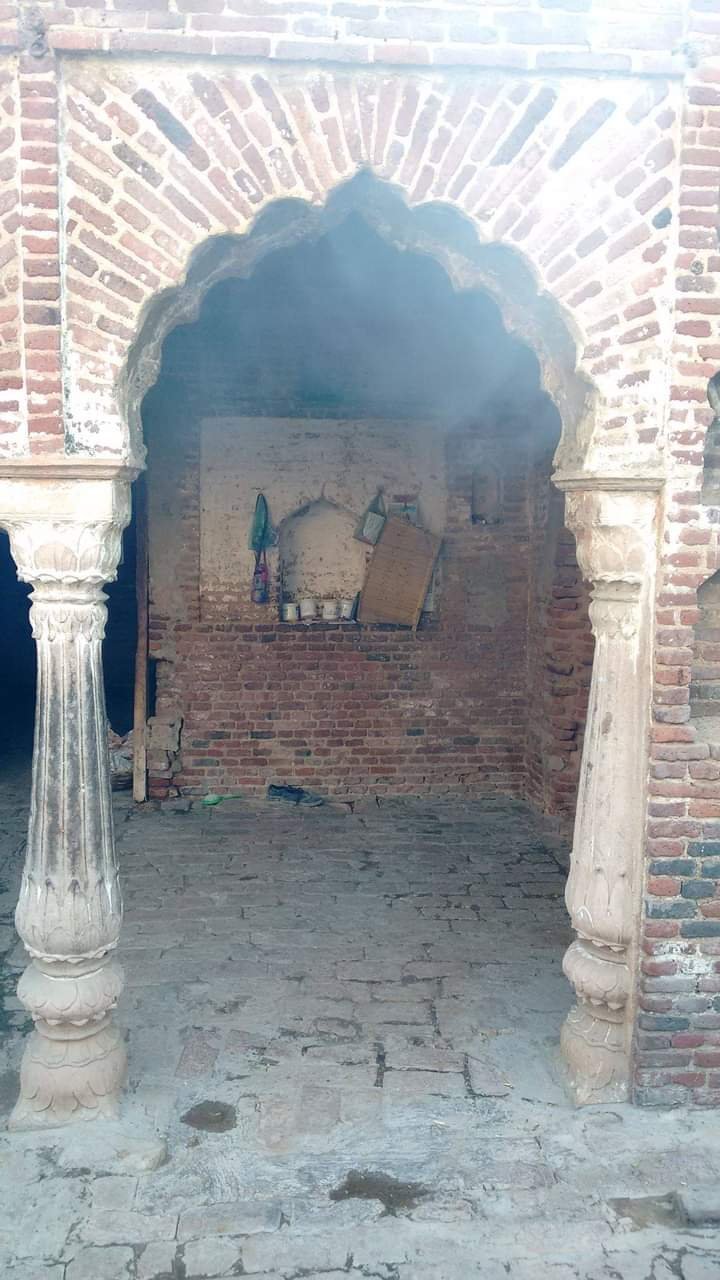
  • Khedewali Haveli: Utilizing royal revenues and military grants, Risaldar Hamir Singh constructed the monumental Khedewali Haveli at Bamheta, featuring fortified perimeter gateways, intricately carved stone arches, and grand courtyards that stand to this day as historical landmarks of 18th-century Doab architecture.

Tradition of Wrestling and Civic Leadership

Beyond military service, Bamheta earned regional renown as a premier nursery of traditional Indian wrestling (Dangal and Kushti). The soil and water of Bamheta have produced generations of renowned national and regional champions, with nearly every household patronizing wrestling akharas.

Following the passing of Chaudhary Chidda Singh, the last recognized hereditary Zamindar before the enforcement of the Uttar Pradesh Zamindari Abolition and Land Reforms Act on 1 July 1952, the family seamlessly transitioned into democratic public service. The House of Shahpur Bamheta is currently presided over by Netaji Kunwar Gajendra Yadav, continuing the family’s civic influence and patronage of regional culture, agriculture, and sports across western Uttar Pradesh.
Plan Your Heritage Journey: Historic Forts, Palaces & Travel Guide

Explore the surviving architectural jewels, royal citadels, and travel connectivity of Shahpur Bamheta.

0 Landmarks Cataloged
Best Season to Visit: October to March (Pleasant) Hotels ➔
Open Regional Map in Google

Preserving the Heritage of Shahpur Bamheta

Do you know of surviving forts, palaces, havelis, stepwells, or monuments in Shahpur Bamheta? Contribute citations, photos, or visit details to help fellow heritage travelers.

Royal Lineage & Genealogy

Royal Succession & Dynasty Transition Note: The Yaduvanshi chieftains of Shahpur Bamheta (Ahar clan, Atrish gotra) trace their ancestry from Raja Deep Pal and Raja Sohanpal, whose sons Raja Dhir Dev and Raja Dharam Dev Singh obtained the zamindari charter from King Anangpal Tomar of Delhi in Vikram Samvat 1093 (c. 1036 AD). Following an unrecorded gap of approximately 19 intermediate generations in regional chronicles, the succession re-emerges in the 18th century with Ch. Pradhan Madu Singh, whose son Risaldar Ch. Hamir Singh built the historic Khedewali Haveli. Succession continued through Ch. Sadaram Singh (who adopted his grand-nephew Ch. Prithvi Singh), followed by his brother Ch. Seri Singh, to Ch. Chidda Singh (the last zamindar prior to 1952), and is presently held by Netaji Kunwar Gajendra Yadav.
  • Gen 1 Raja Deep Pal Early Yaduvanshi Chieftain (राजा दीप पाल)
    Early medieval Yaduvanshi chieftain of the Ahar clan; married Rani Chand Kaur. Father of Raja Sohanpal.
    • Gen 2 Raja Sohanpal (qv) Yaduvanshi Chieftain (qv below) (राजा सोहनपाल)
      Son and successor; witnessed the omen of the kid goat fighting off the wolf at Bamheta (qv below).
  • Gen 2 Raja Sohanpal Chieftain of Bamheta Garh (राजा सोहनपाल)
    Married the Kachwaha Princess of Anaradesh. Led the convoy across the Doab and established the settlement at Bamheta after witnessing the valiant omen of a kid goat defending against a wolf.
    • Gen 3 Raja Surjan Singh (qv) Chieftain of Bamheta (qv below) (राजा सुरजन सिंह)
      Son and successor; father of founders Dhir Dev and Dharam Dev (qv below).
    • Gen 3 Raja Arjan Singh Cadet Chieftain (राजा अर्जन सिंह)
      Son of Raja Sohanpal; migrated eastward to establish separate cadet holdings.
  • Gen 3 Raja Surjan Singh Chieftain of Bamheta (राजा सुरजन सिंह)
    Maintained the ancestral seat at Bamheta; father of Raja Dhir Dev and Raja Dharam Dev Singh.
    • Gen 4 Raja Dharam Dev Singh (qv) Founder of Shahpur Bamheta Zamindari (qv below) (राजा धर्म देव सिंह)
      Secured imperial charter from Raja Anangpal Tomar of Delhi in VS 1093 (qv below).
    • Gen 4 Raja Dhir Dev Co-Founder Chieftain (राजा धीर देव)
      Brother of Raja Dharam Dev; co-founded and fortified the ancestral kheda at Bamheta.
  • Gen 4 Raja Dharam Dev Singh Founder of Shahpur Bamheta Zamindari (c. 1036 AD) (राजा धर्म देव सिंह) c. 1036 AD (VS 1093)
    Obtained a formal royal zamindari charter from Raja Anangpal Tomar, King of Delhi, consecrated on Monday, Ashadha Sudhi Dauj, Vikram Samvat 1093 (c. 1036 AD). Established Shahpur Bamheta as an autonomous feudal lordship.
  • Gen 5 Ch. Pradhan Madu Singh Head of Shahpur Bamheta (18th Century) (चौ. प्रधान मादू सिंह) fl. 18th Century
    Prominent 18th-century chieftain and hereditary Pradhan of Shahpur Bamheta following 19 intermediate generations unrecorded in regional chronicles. Father of three sons.
    • Gen 6 Risaldar Ch. Hamir Singh (qv) Risaldar & Builder of Khedewali Haveli (qv below) (रिसालदार चौ. हमीर सिंह)
      Son and direct successor; cavalry officer in British Indian Army and builder of Khedewali Haveli (qv below).
    • Gen 6 Kunwar Shiv Singh Cadet Scion (कुंवर शिव सिंह)
      Elder son of Ch. Pradhan Madu Singh.
    • Gen 6 Kunwar Ganga Bishan Singh Cadet Scion (कुंवर गंगा बिशन सिंह)
      Son of Ch. Pradhan Madu Singh; father of Mohan Singh and Lajja Ram Singh.
      • Gen 7 Mohan Singh Lineage Scion (मोहन सिंह)
        Father of Prithvi Singh (adopted by Ch. Sadaram Singh) and Ch. Seri Singh.
  • Gen 6 Risaldar Ch. Hamir Singh Risaldar of Cavalry & Zamindar of Bamheta (रिसालदार चौ. हमीर सिंह)
    Illustrious chieftain and Risaldar in the British Indian Army cavalry. Constructed the magnificent fortified Khedewali Haveli at Bamheta. Father of Ch. Sadaram Singh and Balaram Singh.
    • Gen 7 Ch. Sadaram Singh (qv) Zamindar of Shahpur Bamheta (qv below) (चौ. सादाराम सिंह)
      Son and successor; adopted grand-nephew Prithvi Singh (qv below).
    • Gen 7 Balaram Singh Cadet Scion (बलराम सिंह)
      Younger son of Risaldar Hamir Singh.
  • Gen 7 Ch. Sadaram Singh Zamindar of Shahpur Bamheta (चौ. सादाराम सिंह)
    Elder son of Risaldar Hamir Singh. Having no biological issue, he adopted his grand-nephew Prithvi Singh (son of Mohan Singh).
    • Gen 8 Ch. Prithvi Singh (qv) Adopted Son & Zamindar of Bamheta (qv below) (चौ. पृथ्वी सिंह)
      Adopted son and legal successor; died without issue (qv below).
  • Gen 8 Ch. Prithvi Singh Zamindar of Shahpur Bamheta (चौ. पृथ्वी सिंह)
    Adopted son of Ch. Sadaram Singh. Administered the zamindari; died without biological issue, whereupon succession passed to his brother Ch. Seri Singh.
  • Gen 8 Ch. Seri Singh Head of Shahpur Bamheta (चौ. सेरी सिंह)
    Brother of Ch. Prithvi Singh; succeeded to the headship of the family upon his brother's demise without issue. Father of Ch. Chidda Singh.
    • Gen 9 Ch. Chidda Singh (qv) Last Zamindar of Shahpur Bamheta (qv below) (चौ. छिद्दा सिंह)
      Son and direct successor; last recognized Zamindar before 1952 abolition (qv below).
  • Gen 9 Ch. Chidda Singh Last Zamindar of Shahpur Bamheta (चौ. छिद्दा सिंह)
    Son of Ch. Seri Singh. Last hereditary Zamindar of Shahpur Bamheta prior to the abolition of zamindari under the UP Zamindari Abolition Act on 1 July 1952. Father of four sons.
    • Gen 10 Netaji Kunwar Gajendra Yadav (qv) Present Head of Shahpur Bamheta (qv below) (नेताजी कुंवर गजेंद्र यादव)
      Eldest son; prominent political and community leader, and Present Head (qv below).
    • Gen 10 Rajan Yadav Cadet Scion (राजन यादव)
      Son of Ch. Chidda Singh.
    • Gen 10 Mahipal Yadav Cadet Scion (महिपाल यादव)
      Son of Ch. Chidda Singh.
    • Gen 10 Prahlad Yadav Cadet Scion (प्रहलाद यादव)
      Son of Ch. Chidda Singh.
  • Gen 10 Netaji Kunwar Gajendra Yadav Present Head of Shahpur Bamheta Zamindari (नेताजी कुंवर गजेंद्र यादव) Present
    Eldest son of Ch. Chidda Singh. Influential public leader, agriculturalist, and Present Head of the Shahpur Bamheta Zamindari; continues the cultural and athletic patronage of the historic Bamheta Garh.

Pictures

Map

Related Provinces

Historical Research & Fact-Check Notice: Information, lineage records, and statistics for Shahpur Bamheta are aggregated from public internet archives, gazetteers, and open community sources. Historical records may contain discrepancies. Please conduct independent fact-checking. Infolog assumes no liability or responsibility for any damages or decisions made in reliance on this content. Read Full Disclaimer.

Heritage Discussion

No discussions yet. Be the first to share your thoughts!

×

Suggest Archival Record or Correction

Help preserve authentic history for Shahpur Bamheta. Submissions are reviewed with primary gazette sources.

Primary historical sources (Gazetteers, ASI surveys, epigraphic inscriptions) help verify and approve submissions quickly.
Accepted formats: PDF, JPG, PNG, WebP (Max size: 10MB).