hey@infolog.in Republic of India
History & Heritage
All provinces
PROVINCE PROFILE • UTTAR PRADESH

Roopdhani Estate

रूपधनी
Zamindari Uttar Pradesh Region Non-Salute
View Gazette Dossier Compare State

Province at a glance

Ruling Dynasty Yaduvanshi
Clan / Kula Mehar
Community / Caste Ahir / Yadav
Vernacular Name (Hindi) रूपधनी
Sovereign Classification Zamindari
Gun Salute Protocol Non-Salute
Religious Tradition Hinduism
Historical Region Uttar Pradesh
Present State / Jurisdiction Uttar Pradesh

History

Origin and Ancestral Migration

According to family tradition, the ancestral lineage of the Mehar Gotra Ahirs originated in Mehrauli (also known as Mahrauli), near Delhi. The Ahirs are traditionally associated with the forces that fought alongside the army of Prithviraj Chauhan against invading forces during the medieval period.

Following the defeat of the Chauhan power, the ancestors of the Mehar Ahir community migrated away from their original homeland. Family tradition associates the name of their Gotra, Mehar, with their ancestral connection to Mahrauli.

Leaving Delhi, the Mehar Ahirs initially settled in Budaun, Uttar Pradesh. Finding the surrounding land unsuitable for their agricultural and pastoral requirements, they subsequently migrated towards Kasganj, historically part of Etah district.

Their next significant settlement was near Garh Jamun, where they established the village of Barauliya and constructed a small fortified residence known as a Garhi. This settlement marked an important stage in their establishment and territorial consolidation.

Establishment of the Roopdhani Zamindari

The fortunes of the Mehar Ahir family witnessed a significant transformation during the reign of Mughal Emperor Aurangzeb under Kunwar Dileep Singh Yadav.

Emerging as a powerful local chieftain, Kunwar Dileep Singh departed from the ancestral Garhi at Barauliya with his entourage and moved towards the Roopdhani region.

At that time, the territory was under the influence of a local Marwari Samant chieftain. The arrival of Kunwar Dileep Singh and his followers was viewed with suspicion by the existing local authority, which reportedly sent a message demanding their departure.

According to the family account, Kunwar Dileep Singh responded by attacking the chieftain's stronghold. The confrontation resulted in the death of the local ruler and the establishment of Kunwar Dileep Singh's authority over Roopdhani and the surrounding territories.

Following his victory, he consolidated his position and began collecting revenue from the surrounding villages, laying the foundations of the Roopdhani Zamindari Estate.

Within a few months, he supervised the construction of an impressive fortified residence, known as the Mahal or Garhi of Roopdhani.

The structure featured an elevated terrace offering an extensive view of the surrounding countryside and strategically positioned cannon emplacements (Top) for territorial defence. The fortified Mahal subsequently became the principal seat and symbol of the family's authority.

Succession and British Recognition

Following Kunwar Dileep Singh Yadav, his three sons continued managing the family's Zamindari interests.

The lineage subsequently continued through the two sons of his youngest son, Narayan Singh:

  • Chaudhary Gulab Singh
  • Chaudhary Rustam Singh

The two brothers became influential figures in the region and represented the principal branches of the Roopdhani family.

During the British period, their influence and territorial authority received formal recognition from the colonial administration, and the Roopdhani Estate came to be acknowledged as a Notable Zamindari.

The two branches subsequently developed their own family legacies, producing prominent personalities who maintained the family's regional influence.

Expansion under Chaudhary Gajraj Singh

The Roopdhani Zamindari reached a particularly influential phase under Chaudhary Gajraj Singh, son of Chaudhary Gulab Singh.

Regarded as one of the most commanding personalities of his time, Chaudhary Gajraj Singh significantly expanded the estate through the acquisition of smaller and larger landed properties, frequently purchasing estates and villages through revenue auctions.

Under his leadership, Roopdhani emerged as one of the prominent Zamindaris of the Aligarh Division.

The estate's extensive landholdings reportedly encompassed hundreds of villages across several geographical regions, including:

  • Aliganj
  • Azamnagar
  • Barna
  • Other parts of the historical Etah region
  • Parts of Hardoi
  • Parts of Kanpur Dehat
  • Parts of Mainpuri

His authority and commanding personality were such that even British officials reportedly regarded him with considerable apprehension.

Chaudhary Gajraj Singh was also frequently involved in territorial and administrative disputes with the Kayastha Zamindar of Sakit, reflecting the competitive nature of landed authority in the region.
Plan Your Heritage Journey: Historic Forts, Palaces & Travel Guide

Explore the surviving architectural jewels, royal citadels, and travel connectivity of Roopdhani Estate.

0 Landmarks Cataloged
Best Season to Visit: October to March (Pleasant) Hotels ➔
Open Regional Map in Google

Preserving the Heritage of Roopdhani Estate

Do you know of surviving forts, palaces, havelis, stepwells, or monuments in Roopdhani Estate? Contribute citations, photos, or visit details to help fellow heritage travelers.

Royal Lineage & Genealogy

Royal Succession & Dynasty Transition Note: Ancestral Origins & Succession: The Mehar Gotra Ahir zamindars of Roopdhani (Rupdhani) trace their roots to Mehrauli (Delhi), migrating via Budaun and the Kasganj–Etah region to establish Barauliya (near Garh Jamun) and later Rupdhani Estate under Kunwar Dileep Singh Yadav during Aurangzeb's reign. In the junior branch, Chaudhary Gajraj Singh's estate passed to his daughter Shri Mangala Devi Ji (married to Chaudhary Sukhdev Singh, District Judge HJS, of the Rohan Gotra Zamindar family of Mehtarpur Karor), and subsequently to their son Kunwar Yashpal Singh.
  • Gen 1 Kunwar Dileep Singh Yadav Founder of Roopdhani Zamindari Estate
    Founder of the Roopdhani (Rupdhani) Zamindari lineage during Emperor Aurangzeb's reign, following the Mehar Gotra Ahir migration from Mehrauli (Delhi) through Budaun, Kasganj–Etah, and Barauliya. He had three sons; the names of the two elder sons are not recorded in the surviving chronicle.
    • Gen 2 Narayan Singh Youngest Son
      Youngest of the three sons of Kunwar Dileep Singh Yadav (the names of his two elder brothers are unrecorded).
  • Gen 3 Chaudhary Rustam Singh Zamindar of Roopdhani (Elder Branch)
    Elder brother of Chaudhary Gulab Singh; headed the elder branch of the Roopdhani Zamindari.
    • Gen 4 Chaudhary Kripal Singh Descendant (Elder Branch)
      Descendant in the elder branch of Chaudhary Rustam Singh.
    • Gen 4 Chaudhary Saudan Singh Descendant (Elder Branch)
      Descendant in the elder branch of Chaudhary Rustam Singh.
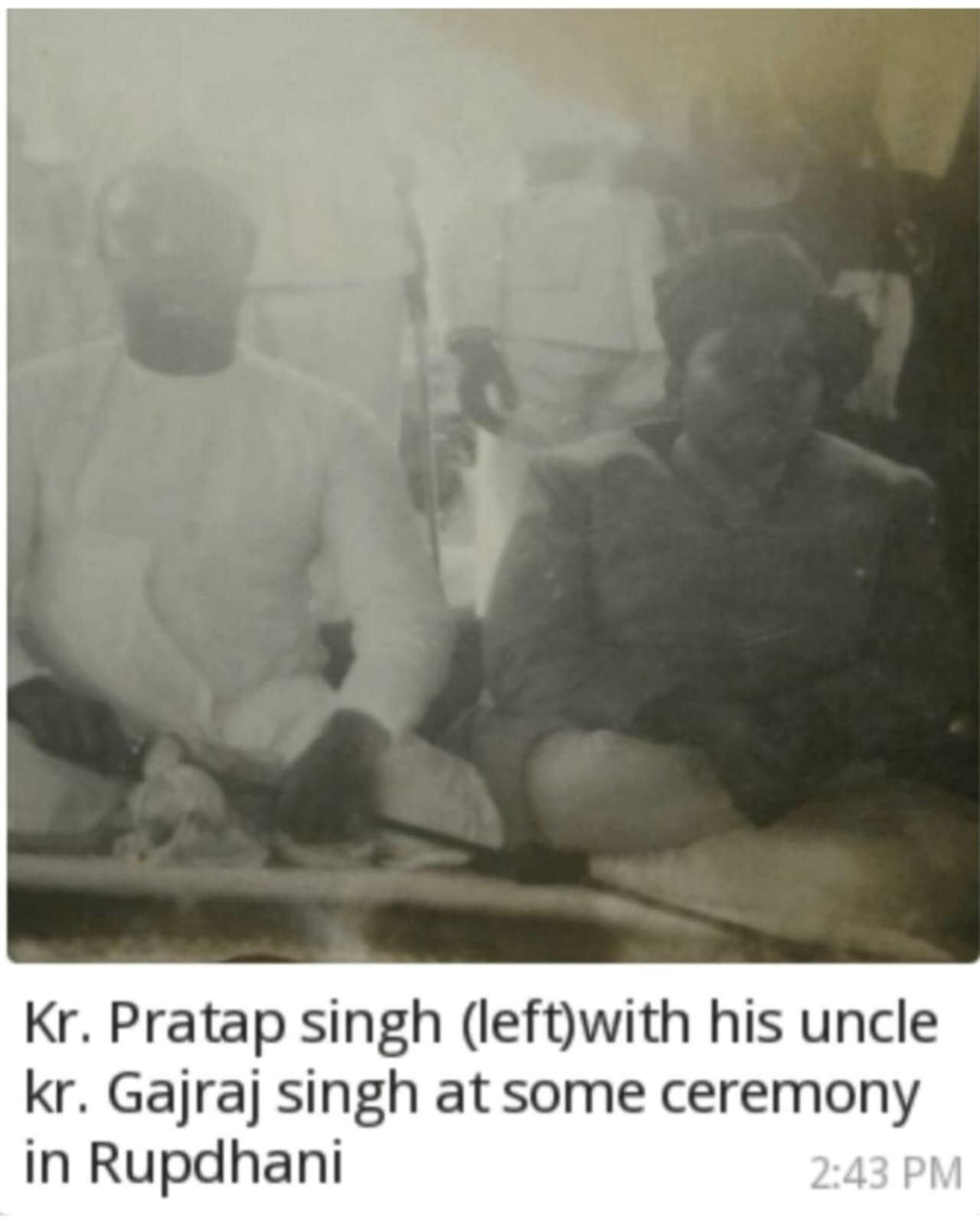
    • Gen 4 Kunwar Pratap Singh (qv) Descendant & Ganga Jamuni Estate Holder (qv below)
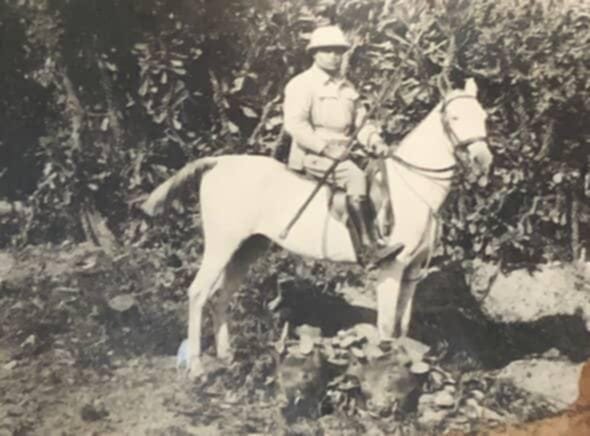
      Descendant in the elder branch; avid hunter and close friend of Kunwar Dharmpal Jadon of Awagarh (qv below).
  • Gen 3 Chaudhary Gulab Singh Zamindar of Roopdhani (Younger Branch)
    Younger brother of Chaudhary Rustam Singh; headed the younger branch of the Roopdhani estate.
    • Gen 4 Chaudhary Gajraj Singh (qv) Son & Prominent Zamindar (qv below)
      Son of Chaudhary Gulab Singh; expanded the Rupdhani Estate across multiple districts (qv below).
  • Gen 4 Kunwar Pratap Singh Zamindar (Elder Branch) & Ganga Jamuni
    Prominent figure of the elder branch, remembered as an avid hunter and close friend of Kunwar Dharmpal Jadon of Awagarh. The Ganga Jamuni estate was acquired and a mansion built for him there.
    • Gen 5 Kunwar Amit Mohan Pratap Singh Son & Heir (Ganga Jamuni)
      Continued the legacy of Kunwar Pratap Singh at Ganga Jamuni.
  • Gen 4 Chaudhary Gajraj Singh Prominent Zamindar of Roopdhani
    Son of Chaudhary Gulab Singh. Expanded the Rupdhani Estate through property acquisitions and auctions across hundreds of villages in Aligarh, Etah, Hardoi, Kanpur Dehat, and Mainpuri. Married Srimati Longshree Devi Ji (his youngest wife).
    • Gen 5 Shri Mangala Devi Ji (qv) Daughter & Heiress (qv below)
      Daughter of Chaudhary Gajraj Singh and his youngest wife, Srimati Longshree Devi Ji; inherited the estate (qv below).
  • Gen 5 Shri Mangala Devi Ji Heiress of Roopdhani Estate
    Daughter of Chaudhary Gajraj Singh and Srimati Longshree Devi Ji. Inherited the Rupdhani Estate and married Chaudhary Sukhdev Singh (District Judge, HJS), younger son of Chaudhary Joravar Singh of the Rohan Gotra Zamindar family of Mehtarpur Karor.
    • Gen 6 Kunwar Yashpal Singh (qv) Son & Estate Custodian (qv below)
      Son of Shri Mangala Devi Ji and Chaudhary Sukhdev Singh; managed the remaining Rupdhani estate (qv below).
  • Gen 6 Kunwar Yashpal Singh Custodian of Roopdhani Estate
    Son of Shri Mangala Devi Ji and Chaudhary Sukhdev Singh; managed the remaining Rupdhani estate.
    • Gen 7 Aishwarya Pratap Yadav Son
      Son of Kunwar Yashpal Singh.
    • Gen 7 Subhanshu Yadav Son
      Son of Kunwar Yashpal Singh.

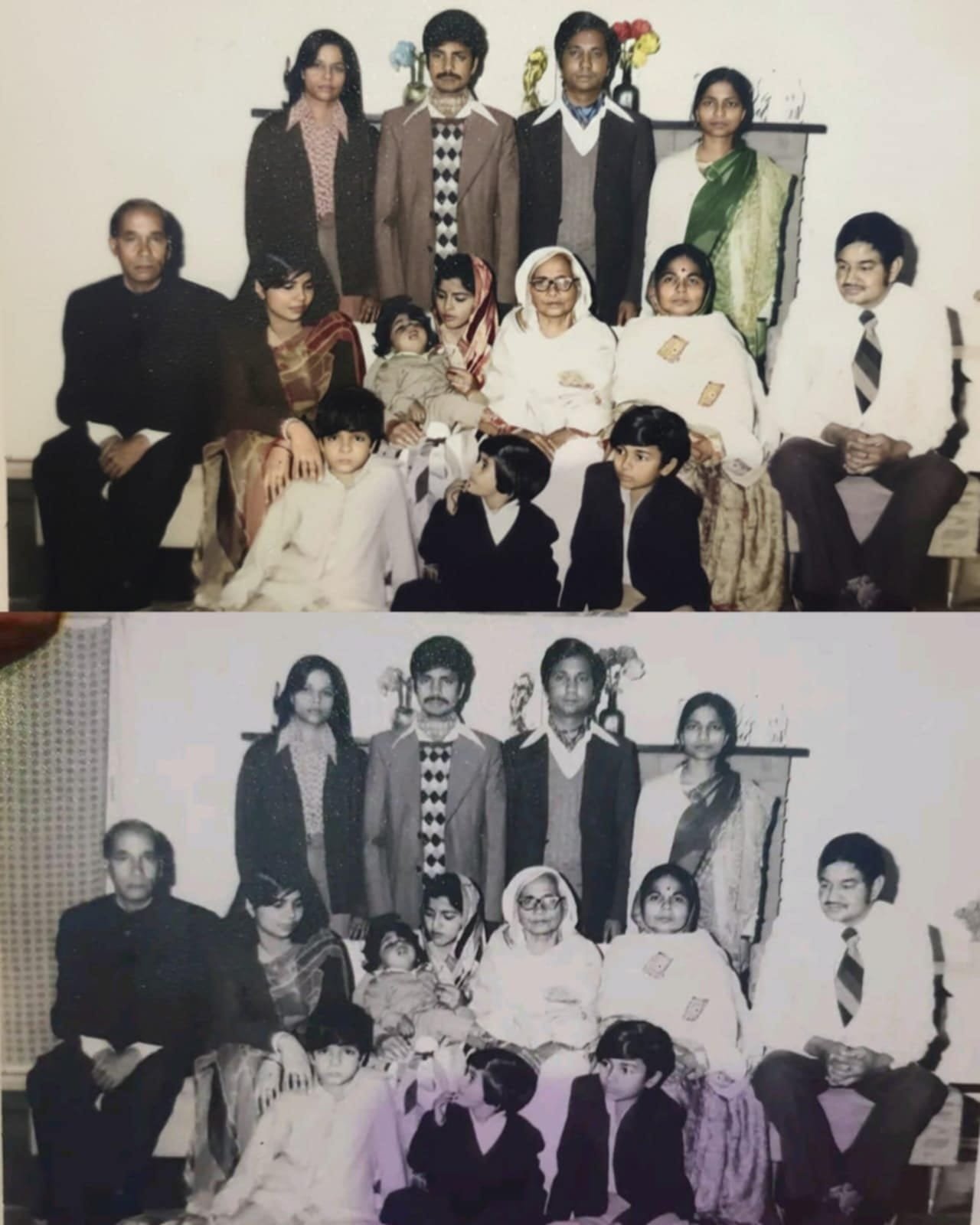
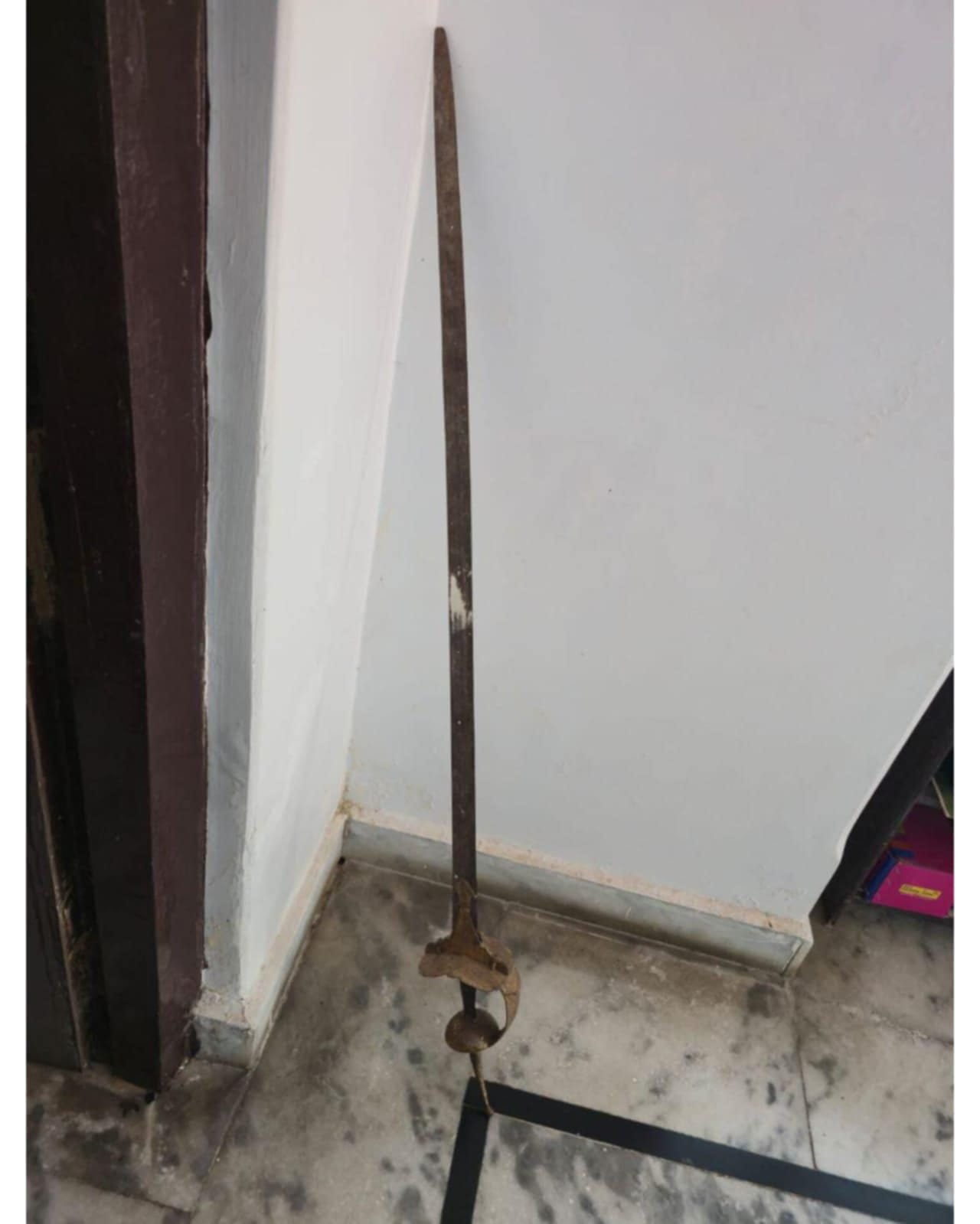
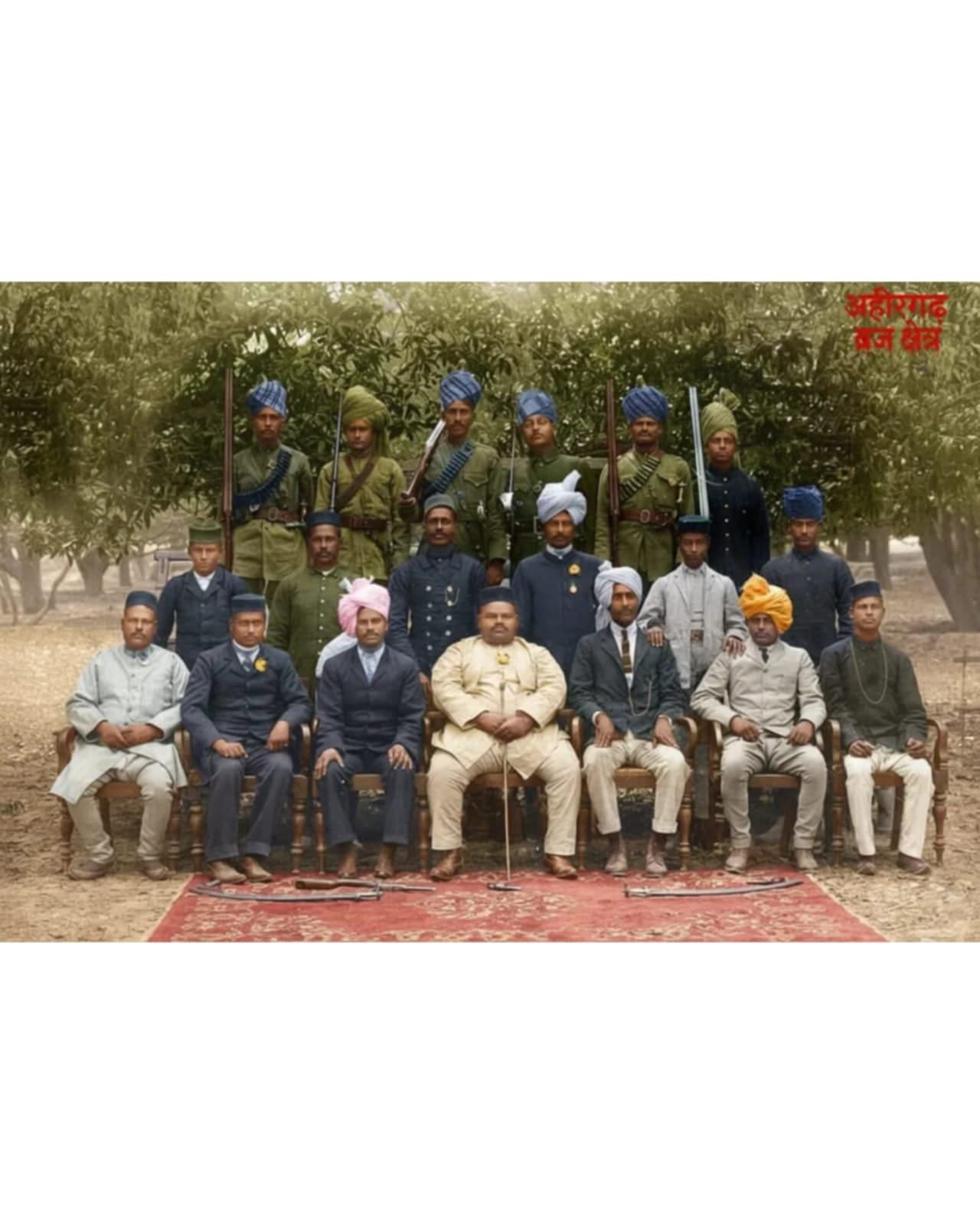
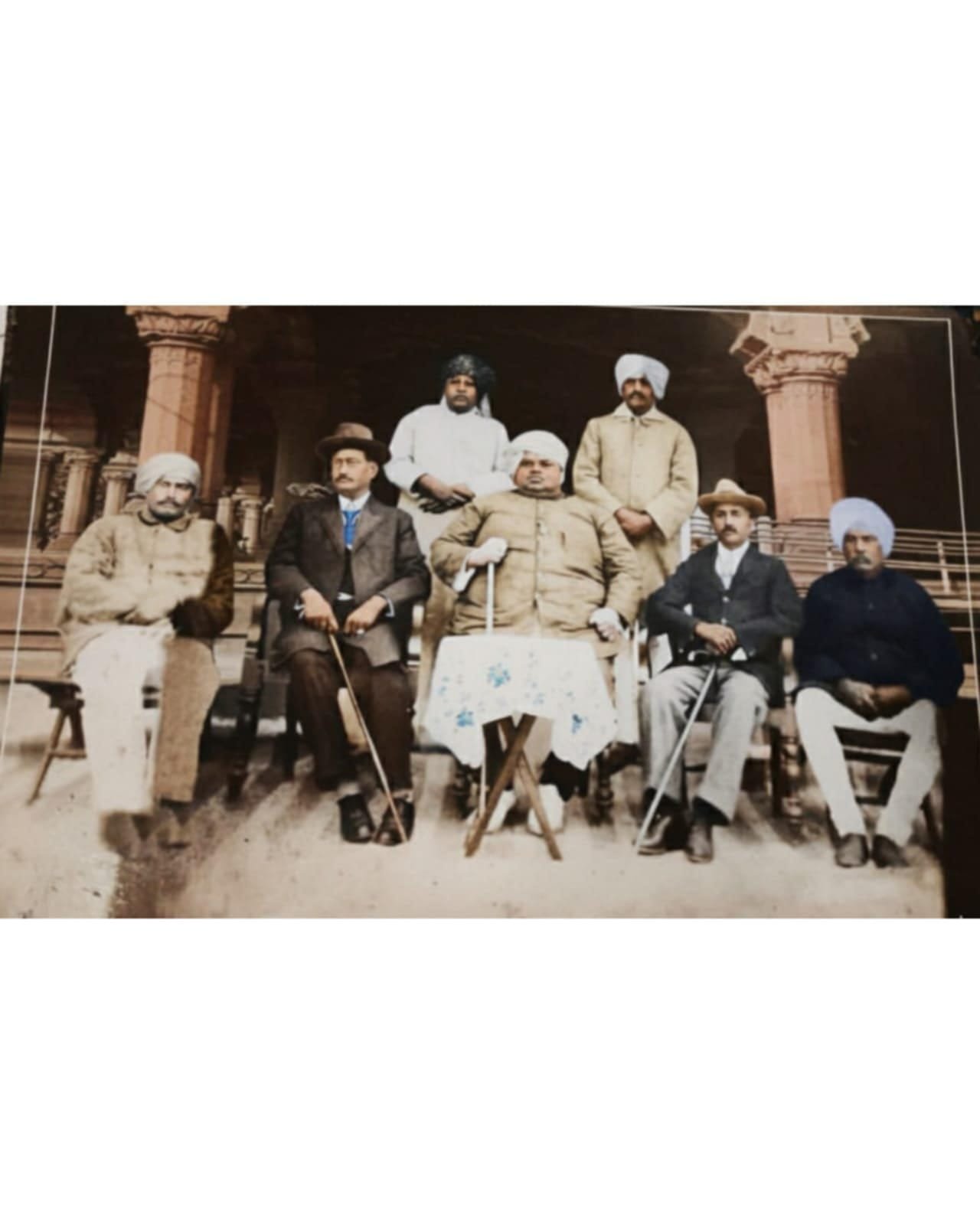
Pictures

Map

Roopdhani Estate

Map coordinates not provided yet.

Related Provinces

Historical Research & Fact-Check Notice: Information, lineage records, and statistics for Roopdhani Estate are aggregated from public internet archives, gazetteers, and open community sources. Historical records may contain discrepancies. Please conduct independent fact-checking. Infolog assumes no liability or responsibility for any damages or decisions made in reliance on this content. Read Full Disclaimer.

Heritage Discussion

No discussions yet. Be the first to share your thoughts!

×

Suggest Archival Record or Correction

Help preserve authentic history for Roopdhani Estate. Submissions are reviewed with primary gazette sources.

Primary historical sources (Gazetteers, ASI surveys, epigraphic inscriptions) help verify and approve submissions quickly.
Accepted formats: PDF, JPG, PNG, WebP (Max size: 10MB).